Why Selling a Junk Car Feels Complicated at First
Sell My Junk Car in Fort Lauderdale, FL is a phrase many vehicle owners search when an old, damaged, or non-running car becomes more trouble than it’s worth. The problem is that most people are unsure about the legal steps. Titles, lien releases, towing rules, and state requirements can feel overwhelming. That uncertainty often leads to delays, missed opportunities for cash, or worse, legal headaches later. The good news is that Florida law is clear and seller-friendly when you understand what’s required. With the right documents and a basic understanding of the process, you can sell your junk car confidently, legally, and for fair value without stress.
Florida Law and the Right to Sell a Junk Vehicle
Selling a junk vehicle in Fort Lauderdale is governed by Florida state law, not guesswork. The state treats junk cars the same as other used vehicles when it comes to ownership transfer. Whether the car runs or not, you must prove legal ownership before it can be sold.
Florida law requires:
- Clear proof that you own the vehicle
- Proper transfer of ownership documents
- Disclosure of certain vehicle details
- Compliance with lien and salvage rules
If these requirements are followed, selling your junk car is completely legal and straightforward. Problems only arise when paperwork is missing or incorrect.
Ownership Proof: The Foundation of a Legal Sale
Why the Vehicle Title Matters
The most important legal requirement to sell junk car property in Fort Lauderdale is the Florida Certificate of Title. This document proves you own the vehicle and have the authority to sell it. Junk car buyers, recyclers, and scrap yards are required to verify ownership before completing a transaction.
Without a title:
- Most licensed buyers cannot legally purchase the car
- You may be limited to scrap-only transactions
- The selling price is often reduced
What If the Title Is Lost or Damaged?
Florida allows replacement titles. You can request a duplicate through the state’s motor vehicle services. The process usually involves:
- Completing a title replacement application
- Showing valid identification
- Paying a small fee
Once issued, the duplicate title carries the same legal authority as the original.
Selling a Junk Car Without a Title in Florida
Is It Ever Legal?
Yes, but with restrictions. Florida allows limited no-title junk car sales in specific circumstances, usually when the vehicle is:
- Very old
- Valued strictly for scrap metal
- Sold to licensed dismantlers
In these cases, buyers may require:
- A bill of sale
- Valid photo identification
- Proof the vehicle is not stolen
Not all junk car buyers accept no-title vehicles, so expectations should be realistic.
Risks of No-Title Sales
Selling without a title can:
- Lower the amount of cash for junk cars
- Increase processing time
- Require additional paperwork
Whenever possible, securing a title is the safest option.
Lien Releases: Clearing Financial Claims
Understanding Liens on Junk Vehicles
If a lender, bank, or financing company is listed on the title, the vehicle has a lien. Florida law requires that liens be fully satisfied before a car can be sold.
You must obtain:
- A lien release document
- Or an updated title showing the lien removed
What Happens If a Lien Is Ignored?
Selling a junk car with an active lien is illegal. It can result in:
- Sale cancellation
- Legal disputes
- Liability for unpaid debt
Always confirm the lien status before contacting junk car buyers.
The Role of the Bill of Sale in Florida
When Is a Bill of Sale Required?
In Florida, a bill of sale is not always mandatory when a title is transferred correctly. However, it is strongly recommended, especially when you sell your junk car for cash.
A bill of sale:
- Documents the transaction date
- Records the sale price
- Protects both buyer and seller
What Information Should Be Included?
A proper bill of sale should list:
- Seller and buyer names
- Vehicle year, make, and VIN
- Sale amount
- Signatures of both parties
This document can be helpful if disputes arise later.
Salvage Titles and Junk Cars
What Is a Salvage Title?
A salvage title indicates the vehicle was declared a total loss by an insurance company. In Florida, salvage vehicles can still be sold, but disclosure is required.
Selling a Junk Car With a Salvage Title
When selling a junk car with salvage status:
- The title must clearly state “salvage”
- Buyers must acknowledge the condition
- Some buyers may pay less due to resale limits
Salvage status does not prevent legal sale, but transparency is required.
Vehicle Identification Number (VIN) Verification
Why VIN Accuracy Is Critical
The VIN must match:
- The title
- The bill of sale
- Buyer records
Florida law requires accurate VIN reporting to prevent fraud and vehicle theft.
What If the VIN Plate Is Damaged?
If the VIN is unreadable:
- Additional inspection may be required
- Buyers may refuse the vehicle
- State verification could be needed
Always confirm the VIN before finalizing the sale.
Read How and When Will I Receive Payment if I Sell My Junk Car in Fort Lauderdale, FL?
Environmental and Disposal Regulations
Florida’s Environmental Compliance Rules
Florida enforces environmental laws to ensure junk vehicles are dismantled safely. Licensed junk car buyers are responsible for:
- Proper fluid disposal
- Recycling hazardous materials
- Meeting environmental safety standards
As a seller, your responsibility is to choose a licensed buyer.
Why Licensed Buyers Matter
Selling to unlicensed individuals can:
- Create environmental liability
- Expose you to legal risk
- Result in improper disposal
Reputable junk car buyers follow state and federal regulations.
Towing and Transportation Rules in Fort Lauderdale
Who Is Responsible for Towing?
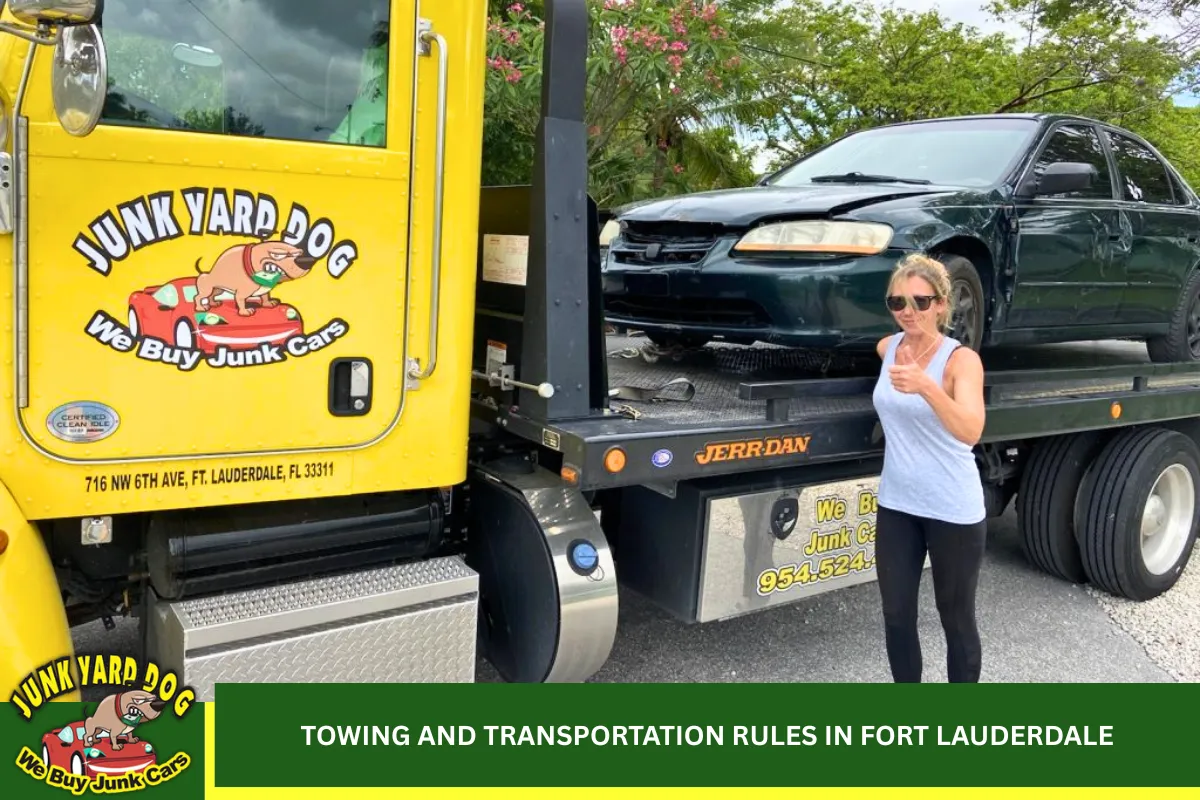
In most cases, the buyer handles towing. Florida law allows licensed buyers to transport junk vehicles legally without requiring the seller to arrange towing.
Is Towing Permitted Without Plates?
Yes. Junk vehicles are typically towed, not driven. License plates should be removed before the car is picked up to avoid liability.
Removing Personal Liability After the Sale
Notice of Sale or Transfer
Florida recommends notifying the state once your vehicle is sold. This step:
- Protects you from future tickets or violations
- Confirms you no longer own the car
This can usually be completed online or through a local office.
Canceling Insurance Coverage
Once the sale is complete:
- Cancel insurance immediately
- Keep proof of cancellation
- Retain sale documents for records
These steps prevent unnecessary charges or disputes.
Taxes and Cash Payments for Junk Cars
Are Junk Car Sales Taxable?
In Florida, private vehicle sales may involve tax obligations for the buyer. Sellers generally do not pay sales tax on junk car transactions.
Cash Payments and Legal Limits
Cash for junk cars is legal in Florida. However:
- Reputable buyers document payments
- Receipts should be provided
- Large transactions may require additional records
Always request proof of payment.
Common Legal Mistakes to Avoid
Errors That Can Delay or Cancel a Sale
Avoid these common mistakes:
- Selling without verifying lien status
- Forgetting to sign the title
- Providing incorrect VIN information
- Leaving plates on the vehicle
These errors can complicate what should be a simple process.
How Fort Lauderdale Sellers Can Prepare in Advance
A Simple Legal Checklist
Before contacting junk car buyers:
- Locate your title
- Confirm lien status
- Remove personal items
- Take photos of the vehicle
- Gather identification
Preparation saves time and increases value.
Turning an Old Vehicle Into a Legal, Stress-Free Sale
Selling a junk car in Fort Lauderdale does not have to be confusing or risky. Florida’s legal requirements are designed to protect both sellers and buyers. With proper documentation, honest disclosure, and a licensed buyer, you can sell junk car property legally and efficiently. Understanding the rules puts you in control and ensures you receive fair compensation without future liability.
Sell My Junk Car in Fort Lauderdale, FL – Junkyard Dog
When people ask “How to sell my junk car without stress?”. We’re proud to be the answer. At Junkyard Dog, we help vehicle owners across Fort Lauderdale, Florida turn unwanted cars into fast cash while following every legal requirement. We handle paperwork, coordinate towing, and make sure the process is simple from start to finish. If you’re ready to sell your junk car, our team is available to provide honest pricing and quick service. Call us at (954) 524-4606 or fill out our contact form today. We’re local, experienced, and ready to help you move forward with confidence.
Frequently Asked Questions
Can I sell a junk car in Fort Lauderdale if it hasn’t run in years?
Yes. Florida law does not require a vehicle to be operational to be sold. As long as you can prove ownership and meet title or documentation requirements, non-running vehicles can be sold legally. Buyers value parts and scrap materials, not just drivability.
What happens if my junk car was abandoned on my property?
If the vehicle is legally yours, you may sell it. If ownership is unclear, Florida requires additional steps to establish rights before selling. Selling a vehicle you do not legally own can lead to serious legal consequences.
Do I need a notary to sell my junk car in Florida?
Not always. Florida titles typically do not require notarization for private sales, but signatures must be accurate and complete. Some buyers may request notarization as an extra safeguard.
Can I sell a junk car that still has registration fees due?
Outstanding registration fees usually do not prevent a sale, but unpaid fees may affect title status. It’s best to verify with state records before proceeding to avoid delays.
How long should I keep my junk car sale records?
Keep copies of your title transfer, bill of sale, and payment receipt for at least several years. These records protect you if questions or disputes arise later.
Disclaimer: This article is for general informational purposes only and does not constitute legal advice. Laws and regulations may change. Always verify current Florida requirements or consult a qualified professional before selling a vehicle.