
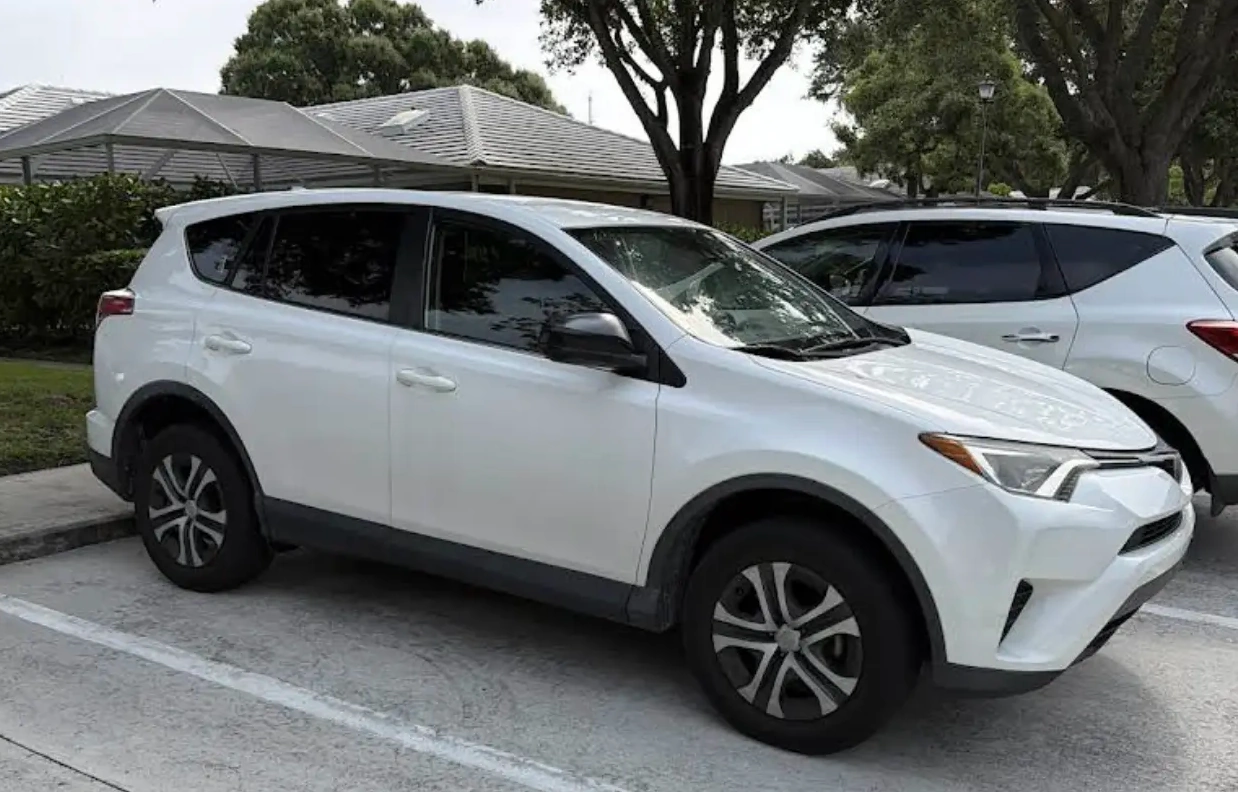
If you own a first-generation refresh RAV4, the 2016 through 2018 model years and you’ve lived with it in Palm Beach County or anywhere else in South Florida, you already know the car ages differently here than it would in Ohio or Oregon. Heat, humidity, salt air, and near-daily UV exposure don’t just wear a vehicle out faster; they wear it out in a specific, predictable pattern. After pulling apart enough of these RAV4s that have rolled through South Florida driveways and lots, a few failure points show up again and again. Here’s what actually breaks first, and why.
1. The AC Compressor and Climate Control System
This is the big one, and it’s not close. In a state where the AC runs nearly 365 days a year, the compressor on a 2016–2018 RAV4 works harder over five years than it would in almost any other climate in the country. Toyota’s compressor on this generation is a scroll-type unit, and while it’s generally reliable, constant high-load cycling in 90+ degree heat accelerates wear on the internal clutch bearing and shaft seal.
The telltale signs are a slow refrigerant leak that shows up as “weak AC” long before total failure, a clicking or grinding noise at startup when the clutch first engages, and eventually a compressor that seizes outright. Because South Florida owners run the AC on max almost constantly, the system also cycles through more start-stop clutch engagements per year than a vehicle in a milder climate, which is exactly the kind of repeated mechanical stress that shortens clutch life.
Beyond the compressor itself, the condenser sits directly behind the front grille and takes the brunt of road debris and salt air corrosion, especially for vehicles that spend time near the coast. Pinhole leaks in the condenser are common enough by year five or six that it’s one of the most frequent “why is my AC blowing warm” diagnoses on these vehicles down here.
2. Door Handle Sensors and Smart Key Components
The 2016–2018 RAV4’s exterior door handles house the capacitive touch sensors for the smart key entry system, and these sensors are notoriously sensitive to moisture intrusion. South Florida’s combination of daily humidity, afternoon downpours, and salt-laden air is close to a worst-case environment for these components.
What typically happens is corrosion builds up on the small circuit board or wiring connector behind the handle, and the sensor either stops responding to touch or starts triggering false locks and unlocks. Owners often notice it first as an intermittent problem, the driver’s door handle works fine most days, then randomly won’t unlock the car, especially after a rainstorm. Once the corrosion sets in, it tends to progress rather than resolve itself. This is one of the more common individual-part failures on these vehicles in this region, distinct from a bad battery in the key fob itself, which is a separate and unrelated issue.
3. Dashboard and Interior Plastic Degradation
If you’ve sat in a five-year-old RAV4 that’s spent its life parked outside in Florida, you’ve probably already noticed the texture change in the dashboard, a slightly tacky or soft feel, visible fine cracking near the defroster vents, or fading in the plastic around the instrument cluster hood. This isn’t a manufacturing defect specific to Toyota; it’s UV degradation of the polymer and the plasticizers used to keep dashboard material flexible, and Florida’s sun intensity accelerates this process dramatically compared to northern states.
The 2016–2018 RAV4’s dash uses a soft-touch material on the upper surface that looks and feels great when new but is particularly prone to UV-driven cracking once the plasticizers start to break down and off-gas, which is also the source of that hazy film that tends to build up on the inside of the windshield in older Florida-parked vehicles. Cars that spend most of their life in a garage or under carport shade hold up noticeably better than ones parked in open lots, which is part of why dashboard condition varies so much even among vehicles of the same age and mileage.
4. Weatherstripping and Door Seals
Rubber door seals and weatherstripping take a beating from UV exposure and heat cycling, expanding in the afternoon sun and contracting overnight, day after day, for years. On the RAV4, this shows up as seals that go from pliable to stiff and eventually start cracking or losing their shape, especially along the top of the door frame and around the sunroof if the vehicle is equipped with one.
Once the rubber stiffens, it stops sealing properly, and that’s when owners start noticing wind noise at highway speed, water intrusion during heavy rain, or a musty smell developing in the cabin from trapped moisture. In a five-year-old vehicle that’s spent its life outdoors in South Florida, degraded weatherstripping is common enough that it’s worth a visual check any time you’re evaluating a used unit, since it’s easy to overlook compared to more obvious mechanical issues.
5. Battery and Electrical Connector Corrosion
Heat is genuinely hard on car batteries; it accelerates the chemical reaction inside the battery that leads to capacity loss, which is the opposite of what most people assume about cold-weather battery problems. A battery that might last six or seven years in a temperate climate often needs replacing closer to the three-to-four-year mark in South Florida. This is standard automotive chemistry, not a RAV4-specific quirk, but it’s worth including because it’s one of the most common “the car just wouldn’t start” calls on these vehicles.
Related to this, exposed electrical connectors under the hood, particularly around the battery terminals and anything near the front of the engine bay, are more prone to corrosion in humid, salt-air environments. This is more pronounced for vehicles that spend regular time near the coast, where salt content in the air is higher than inland.
What This Means If You’re Looking at a Used 2016–2018 RAV4
None of this means the first-gen refresh RAV4 is a bad vehicle for Florida, it’s a genuinely durable platform, and Toyota’s overall reliability reputation holds up here too. What it does mean is that the specific things that fail first on a Florida-driven RAV4 aren’t necessarily the same things that fail first on one that spent its life in Michigan. If you’re inspecting one of these vehicles, running the AC on max for a few minutes to listen for compressor noise, testing every door handle a few times including after the car has sat in the rain, checking the dashboard surface for early cracking near the vents, and looking closely at door and sunroof seals will tell you more about how that specific car was stored and maintained than the odometer will.
For anyone dealing with a RAV4 that’s starting to show several of these issues at once, knowing which components take the earliest hit in this climate makes it easier to decide whether it’s worth continuing to repair or time to move on.
Dealing with a RAV4 that’s more trouble than it’s worth?
If your 2016–2018 RAV4 has racked up AC, electrical, or interior issues on top of normal wear, repair costs can add up fast, especially once several of these problems hit around the same time. If you’re weighing a costly fix against just moving on, Junkyard Dog Online buys used and junk vehicles in Palm Beach County and can give you a fast, no-hassle offer.
What Palm Beach County Sellers Are Saying